

Miscellaneous
TTBL hosts first German-Chinese economic forum | Timo Boll: “Sports can serve as a role model”
As part of the premiere of the Leapmotor Cup Grand Opening, the Table Tennis Bundesliga (TTBL), together with the Consulate General of the People’s Republic of China in Frankfurt am Main and the Academy of German World Market Leaders (ADWM), hosted the first German-Chinese Economic Forum. Around 100 invited decision-makers from the worlds of business, politics, academia, and elite sports gathered in Nuremberg for the event.
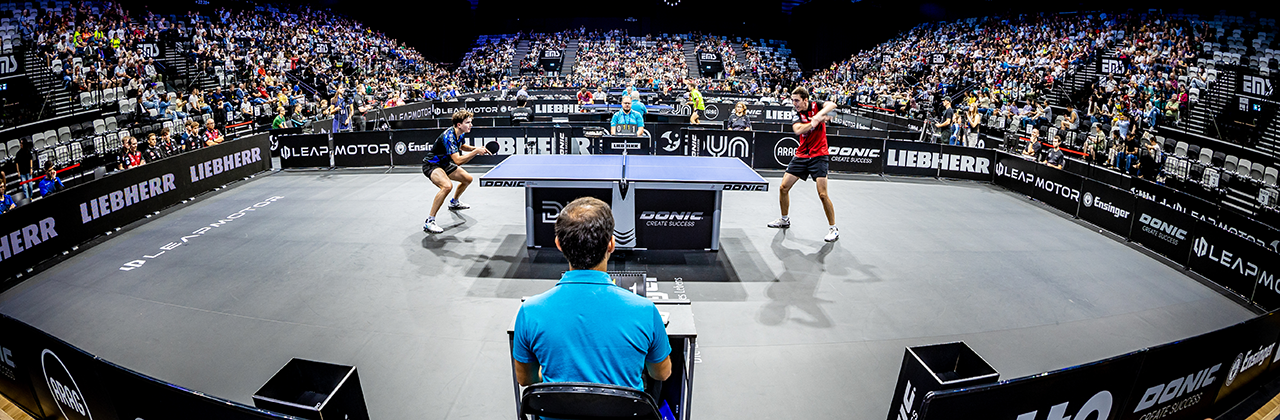
Just a few meters away from the table tennis tables where the round of 16 of the German Table Tennis Cup was played on Saturday, the German-Chinese Economic Forum presented by Leapmotor focused on the question of what sustainable economic cooperation between Germany and China might look like.
In addition to high-ranking business leaders and academics, participants and speakers included table tennis superstar Timo Boll, economist Prof. Dr. Marcel Fratzscher (President of DIW Berlin), former Federal Minister Rudolf Scharping, Opel CEO and Stellantis Germany Head Florian Huettl, Chinese Consul General Huang Yiyang, Dyn CEO Andreas Heyden, and former Baden-Württemberg Minister of Economic Affairs and ADWM founder Dr. Walter Döring. The afternoon event at the Kia Metropol Arena was hosted by Olympic fencing champion and China expert Britta Heidemann and ZDF sports journalist Norbert König.
TTBL Breaks New Ground with the German-Chinese Economic Forum
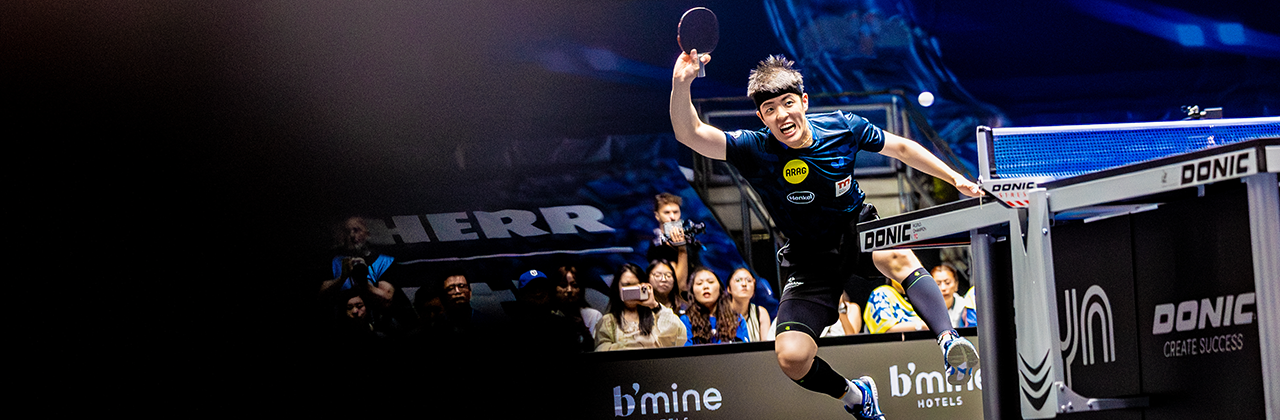
The German-Chinese Economic Forum was integrated into the Leapmotor Cup Grand Opening and took place alongside the sporting events. Table tennis, a sport deeply rooted in both Germany and China, provided the backdrop for economic exchange. The guiding principle: Sport builds trust—trust fosters economic cooperation.
In doing so, the TTBL is taking on a role typically reserved for foreign chambers of commerce and economic delegations. “With the German-Chinese Economic Forum, the TTBL is breaking new ground. I am not currently aware of any comparable format in German professional sports where a league brings together companies, politicians, and international partners in this way,” says Nico Stehle, Managing Director of Tischtennis Bundesliga GmbH.
Personal Relationships Become a Key Economic Factor
The forum centered on a central theme that tied all program items together: that personal relationships are becoming a key economic factor in an increasingly challenging geopolitical environment. In various Executive Talks, participants examined the current economic situation in both countries as well as the opportunities and risks of deeper cooperation.
“There is a long-standing connection between Germany and China,” said ADWM Managing Director Döring in his opening remarks. “I am convinced that the world’s second- and third-largest economies cannot be decoupled.”
TTBL Generates 800 Million Impressions Per Season
The TTBL cites the sport’s international popularity and its own presence in the Chinese market as the reasons for its role as host. “Table tennis holds a high status in both Germany and China. I am convinced that our sport is the perfect bridge to foster even closer ties and cooperation between the two countries, even off the table,” explains TTBL Managing Director Stehle. “Globally, there are more than 600 million table tennis fans. In China alone, there are more than 100 million active players. Table tennis is one of the world’s biggest sports. With our media partner Dyn, we reached several hundred million people in China alone with the TTBL last season. Overall, the league now achieves a global media reach of around 800 million impressions per season.”
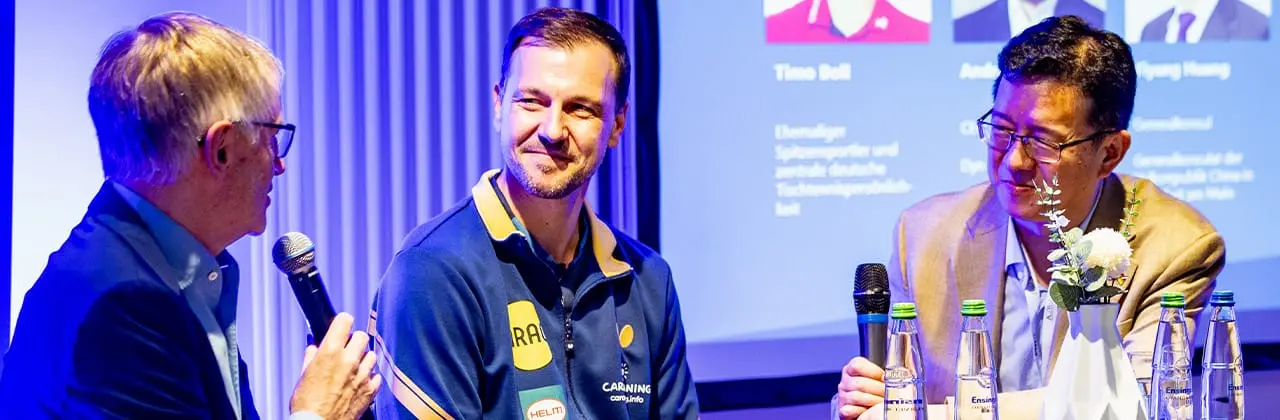
Especially since Fan Zhendong joined the TTBL in the summer of 2025, the TTBL has seen a surge in attention in China. Timo Boll spoke about his relationship with the Chinese superstar—and used this personal example to illustrate how harmonious cooperation across national borders can succeed. “We’ve taken short vacations together, and we’ve even spent Christmas together,” said the German table tennis idol. “This shows that, despite fierce competition, exchange and cooperation are possible. With this attitude, sports can serve as a role model for politics and the economy. I’ve learned a lot from the Chinese, and I believe they’ve learned something from me as well.”
Sports Build Trust, Trust Builds Cooperation
Chinese Consul General Huang spoke to the unifying power of sports. “Table tennis is not only a fascinating sport, but it also has the power to bring people together and build bridges,” he said. “Sports build trust. And trust builds economic cooperation. We look to the future with confidence—and would like to discuss what we can do together in the future and how we can give new impetus to German-Chinese relations.”
Between program items and afterward, the German-Chinese Economic Forum provided ample opportunity for conversation in the hospitality area, including during the “Play with the Legends” event, where guests could hit a few balls with Timo Boll.
Fratzscher paints a generally positive picture of the current situation
When it comes to German-Chinese economic relations, the automotive industry is often the focus. Florian Huettl provided insights into current developments: “The automotive industry is one of the most important industries in Germany and Europe and a key driver of prosperity. That’s why the discussion about its performance is so important,” said the Managing Director of Stellantis Germany, who is involved with the Leapmotor brand as a partner of table tennis in Germany. “The industry is undergoing a transformation—toward carbon neutrality and new propulsion technology. The successful business model of recent years must be restructured.”
Marcel Fratzscher painted a generally positive picture of the situation, albeit one fraught with challenges. “I am convinced that the mood in Germany is significantly worse than the reality. We have great small and medium-sized enterprises that are highly innovative and competitive,” the economist began, calling for diversification of the economy: “We must not become less open, as some are currently demanding—rather, we must become even more open.”
“The future lies in innovation, in a willingness to take risks, and in cooperation.”
Rudolf Scharping made a similar point: “A country that is so closely integrated into the international community and is fundamentally in such good shape as Germany must not build walls; otherwise, it will damage its own future,” said the former Federal Minister of Defense, who now works as a management consultant and investor. “Our future lies in innovation, in a willingness to take risks, in cooperation, and in competition—especially with China.”
The organizers view the German-Chinese Economic Forum as a long-term platform for exchange, networking, and cooperation. The goal is to establish lasting connections between companies, institutions, and decision-makers in both countries and to generate new momentum for international cooperation. The inaugural event alone has already demonstrated the potential inherent in this partnership.
“The tremendous response confirms that table tennis can be much more than just a sporting arena,” says TTBL Managing Director Stehle. “Today, the TTBL has unique connections between Germany and China. We would like to make even greater use of these in the future to bring people, companies, and institutions into dialogue with one another.”
Header photo: Timo Boll (center) in conversation with Huang Yiyang (right) and Norbert König (by BeLa Sportfoto)